Confucius left no writings of his own. The Analects were compiled by his disciples and their students after his death; quotes follow James Legge’s classic translation and numbering.
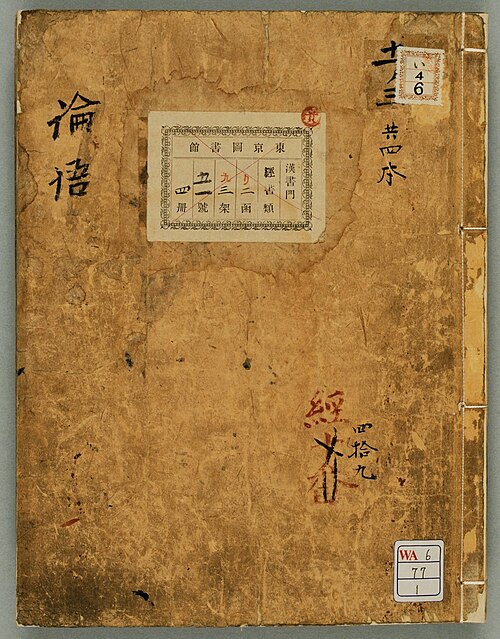 National Diet Library / World Digital Library, public domain
“Is it not pleasant to learn with a constant perseverance and application?”Analects 1.1
The book opens not with a rule but with the pleasure of learning.
“Learning without thought is labour lost; thought without learning is perilous.”Analects 2.15
Study and reflection need each other.
“When you know a thing, to hold that you know it; and when you do not know a thing, to allow that you do not know it — this is knowledge.”Analects 2.17
Honesty about the limits of what you know is itself a kind of knowledge.
“To see what is right and not to do it is want of courage.”Analects 2.24
Knowing the good is not enough; virtue is in the doing.
“When we see men of worth, we should think of equalling them; when we see men of a contrary character, we should turn inwards and examine ourselves.”Analects 4.17
Other people are mirrors — both the admirable and the disappointing ones.
“When I walk along with two others, they may serve me as my teachers. I will select their good qualities and follow them, their bad qualities and avoid them.”Analects 7.21
Anyone can teach you something, if you are paying attention.
“If there want but one basket of earth to complete the mound, and I stop, the stopping is my own work.”Analects 9.18
Persistence is a choice you keep making — and so is quitting.
“What you do not want done to yourself, do not do to others.”Analects 15.23
Confucius’ “one word for a whole life”: reciprocity.
“The superior man is modest in his speech, but exceeds in his actions.”Analects 14.29
Let what you do say more than what you say.
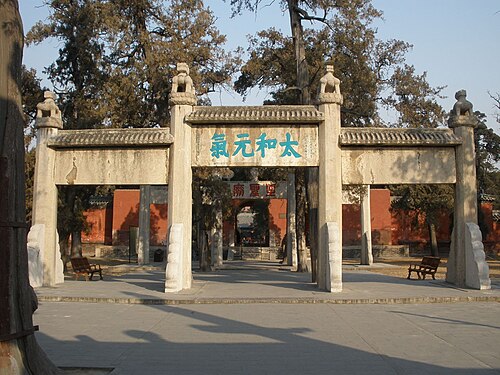 Acstar, CC BY-SA 3.0
These circulate widely under the same name, but don’t hold up:
Confucius taught ethics, filial piety, and harmony in society. His lessons emphasize moral integrity, respect, and continuous self-improvement.
Stanford Encyclopedia: Confucius · Chinese Text Project: The Analects · Confucius: life and ideas