Some left no writing. Some left writing no one can read. Some were written out of the story entirely by the people who found them. Pick one to find out what's actually documented.
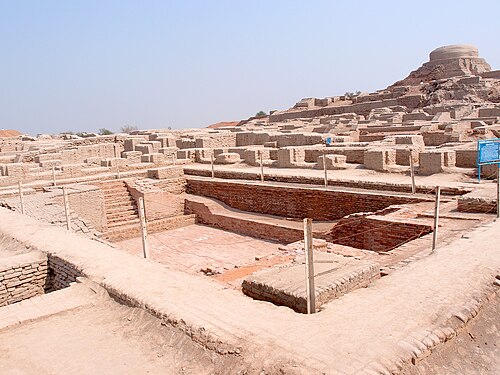
Flourishing c. 3300–1300 BCE across what is now Pakistan and northwest India, the Indus Valley (or Harappan) Civilization built some of the ancient world's most sophisticated cities — Mohenjo-daro and Harappa had grid-planned streets, standardized fired-brick sizes used across a huge territory, and covered drainage systems more advanced than anything else built anywhere for another 3,000 years. At its height it may have been the largest of the early urban civilizations by population.
What sets it apart is silence: thousands of carved seals bear a short, consistent script that has never been deciphered, despite a century of attempts — we don't know what language it recorded, or even confidently whether it encoded language at all rather than symbols. No royal palaces or grand temples have been identified either, which has led some archaeologists to suggest a more decentralized, less hierarchical society than contemporary Egypt or Mesopotamia, though this remains debated. The civilization's decline around 1900 BCE was once blamed on an "Aryan invasion" — a theory now discredited — and is now attributed to shifting monsoon patterns and the drying of the Ghaggar-Hakra river system.
Flourished: c. 3300–1300 BCE, Pakistan and northwest India
Key sites: Mohenjo-daro, Harappa, Dholavira, Rakhigarhi
Mystery: Its script remains completely undeciphered
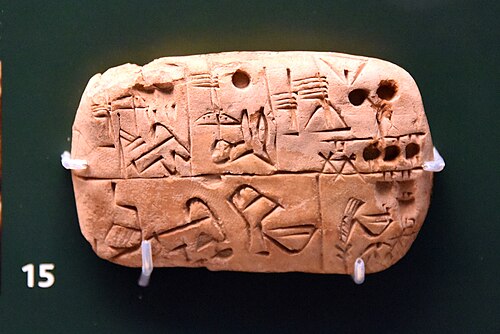
In the marshy floodplain of southern Mesopotamia (modern Iraq), the city-states of Sumer — Uruk, Ur, Lagash, Eridu — produced the world's earliest confirmed writing system, cuneiform, first appearing in proto-form around 3300 BCE as an accounting tool for grain and labor before evolving into a full script used for law, literature, and astronomy. Sumerians are also credited with early developments of the wheel, the sexagesimal (base-60) number system that still gives us 60 minutes and 360 degrees, and some of the first formal law codes.
Sumerian records blend documented history with mythology in ways that reward careful reading: the Sumerian King List records real, verifiable dynasties alongside legendary kings said to have reigned for tens of thousands of years before a great flood — a flood story that also appears, independently recorded, in the Epic of Gilgamesh, centuries before the similar account in Genesis. Most historians now see the biblical flood narrative as drawing on this much older Mesopotamian literary tradition, not the reverse.
Flourished: c. 4500–1900 BCE, southern Mesopotamia
Key sites: Uruk, Ur, Lagash, Eridu
Legacy: The world's earliest confirmed writing system, cuneiform
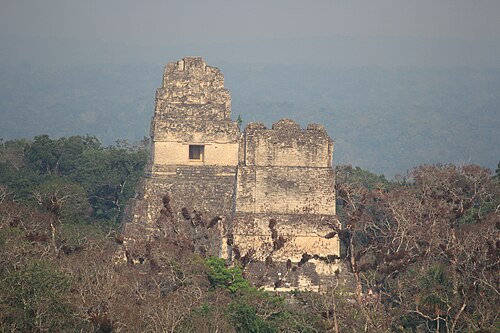
Across the Yucatán Peninsula, Guatemala, and Belize, Maya civilization flourished from roughly 2000 BCE into the Spanish colonial period, reaching its architectural and intellectual peak during the Classic period (c. 250–900 CE). Maya scholars independently developed the mathematical concept of zero, tracked astronomical cycles with remarkable precision, and built the Long Count calendar — a system capable of dating events across tens of thousands of years — alongside monumental cities like Tikal, Chichén Itzá, and Palenque.
The so-called "Maya collapse" — the abandonment of many southern lowland cities in the 8th and 9th centuries CE — is a genuine, still-active archaeological debate, with prolonged drought, warfare between city-states, and agricultural overexploitation as the leading current explanations, likely acting together rather than any single cause. This is worth separating clearly from the popular "2012 apocalypse" myth, which misread the completion of a Long Count calendar cycle (a routine calendrical turnover, like an odometer rolling over) as a predicted end of the world — the Maya themselves left no such prophecy, and Maya peoples and their descendants, of course, never disappeared.
Flourished: c. 2000 BCE – 1500s CE, Mesoamerica
Key sites: Tikal, Chichén Itzá, Palenque, Copán
Common myth: The "2012 apocalypse" was a modern misreading, not a Maya prophecy
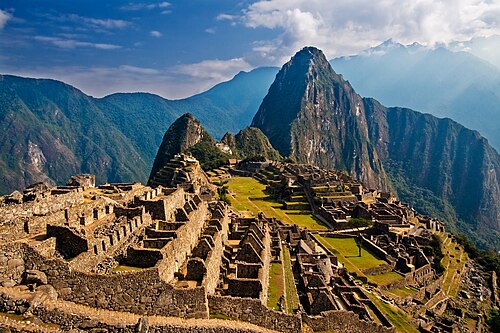
At its height in the early 1500s, the Inca Empire — known to its own people as Tawantinsuyu, "the four regions" — was the largest state ever built in the pre-Columbian Americas, stretching along the Andes from modern Colombia to Chile. It was bound together by the Qhapaq Ñan, a road network of roughly 40,000 kilometers, and by extraordinary stonework: walls at sites like Machu Picchu and Sacsayhuamán fitted so precisely that no mortar was used and a knife blade still can't slip between the stones.
Remarkably, the Inca administered this entire empire — census records, tax obligations, storehouse inventories, possibly even historical narratives — without a conventional writing system, instead using quipu, elaborate arrangements of knotted and colored cords. That numerical use is well understood; whether quipu also encoded narrative or linguistic information is a genuine, unresolved question actively being researched today. The empire's fall came with stunning speed after 1532: a smallpox epidemic, introduced by earlier Spanish contact elsewhere in the Americas, had already swept through the population and triggered a civil war of succession before Francisco Pizarro's small conquistador force ever arrived.
Height: Early 1500s, largest empire in the pre-Columbian Americas
Engineering: The Qhapaq Ñan road network, ~40,000 km
Mystery: How much information quipu knot-records actually encoded
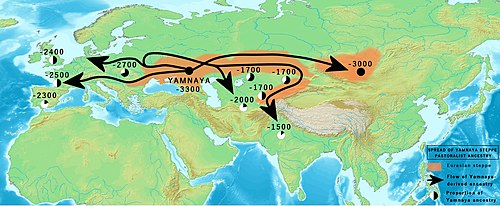
Unlike the other entries on this page, the Yamnaya weren't city-builders — they were pastoralist herders of the Pontic-Caspian steppe (modern Ukraine and southern Russia), flourishing roughly 3300–2600 BCE, best known archaeologically for burying their dead under earthen mounds called kurgans, often alongside wagons, and for early, extensive use of horses and wheeled carts. They left no writing, so almost everything we know about them comes from graves, bones, and — increasingly — DNA.
What makes the Yamnaya a live topic in current research is genetics: large-scale ancient-DNA studies since the mid-2010s have shown that Yamnaya-related populations migrated into Europe and South Asia around 5,000 years ago in numbers large enough to substantially reshape the genetic ancestry of both regions. This migration is now the leading archaeological and genetic candidate for how Proto-Indo-European — the reconstructed ancestor language behind English, Hindi, Russian, Persian, and hundreds of other languages — actually spread, a question linguists had debated on word-evidence alone for over a century before ancient DNA gave it a physical trail to follow.
Active: c. 3300–2600 BCE, Pontic-Caspian steppe
Known chiefly through: Kurgan burials and, increasingly, ancient DNA
Significance: Leading candidate source for the spread of Indo-European languages
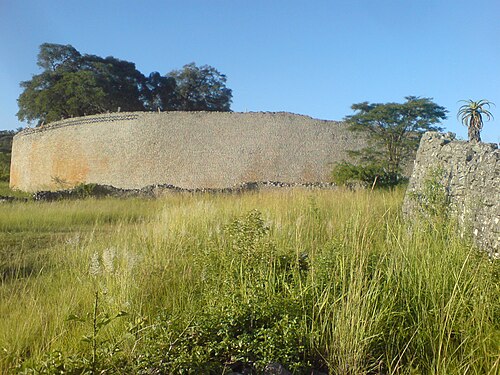
Built between roughly 1100 and 1450 CE in the hills of present-day Zimbabwe, Great Zimbabwe was the capital of a wealthy trading kingdom that exported gold and ivory into Indian Ocean trade networks reaching as far as China. Its Great Enclosure is the largest ancient stone structure in sub-Saharan Africa, built entirely from dry-stone construction — precisely cut granite blocks stacked without any mortar — enclosing walls up to 11 meters high and 5 meters thick.
The clearest "documented history vs. myth" story here isn't ancient — it's colonial. 19th- and 20th-century European visitors and, later, the white-minority Rhodesian government actively promoted theories crediting Phoenicians, Arabs, or a Biblical Queen of Sheba with building the site, explicitly to avoid acknowledging that Bantu-speaking Africans — ancestors of today's Shona people — had built it themselves. Archaeological work through the 20th century thoroughly settled the question: pottery, radiocarbon dating, and continuity with Shona building traditions confirm a purely African origin. The modern country took its name from the site upon independence in 1980.
Flourished: c. 1100–1450 CE, southern Africa
Built by: Ancestors of the Shona people, confirmed by 20th-century archaeology
Myth debunked: Colonial-era claims of foreign builders, now discredited
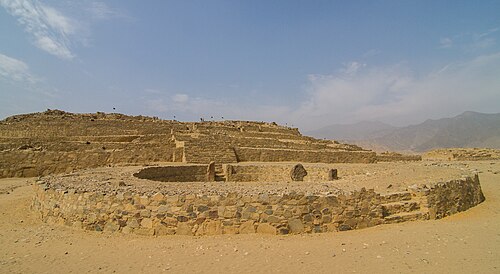
In the Supe Valley of Peru, the city of Caral was built starting around 3000 BCE — making it, along with the wider Norte Chico region, the oldest known civilization in the Americas, contemporary with the great pyramids of Egypt and roughly two thousand years older than the earliest Maya cities. Caral's builders raised monumental step pyramids and sunken circular plazas without ever developing ceramics or, as far as evidence shows, a writing system.
What has drawn particular archaeological interest is an apparent absence: excavations at Caral have turned up no weapons, no mutilated remains, and no defensive walls — features that are common at other early urban sites elsewhere in the world. Some archaeologists, most notably Ruth Shady Solís, who led the major excavations, have proposed Caral as a rare example of an early civilization that may have developed without organized warfare, its social cohesion built instead around shared ceremonial and trade activity. This interpretation remains actively debated rather than settled fact, but the scarcity of violence-related evidence at the site itself is well documented.
Flourished: c. 3000–1800 BCE, Supe Valley, Peru
Significance: The oldest known civilization in the Americas
Ongoing debate: Whether it developed without organized warfare
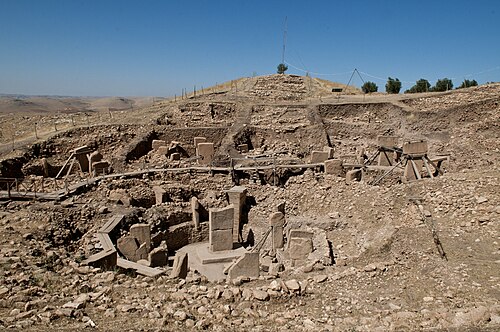
In southeastern Turkey, Göbekli Tepe was built starting around 9600 BCE — roughly 6,000 years before Stonehenge, and before humans anywhere are known to have practiced farming, made pottery, or developed writing. Hunter-gatherers raised massive T-shaped limestone pillars, some over 5 meters tall and weighing tons, arranged in circles and carved with detailed reliefs of foxes, boars, snakes, and birds, at a site with no evidence of permanent habitation nearby.
Its discovery overturned a long-standing assumption in archaeology that settled agricultural life must come before large-scale monumental construction, since raising and organizing labor for structures like this was assumed to require the food surplus only farming could provide. Excavation director Klaus Schmidt argued the reverse may be true here — that gathering large groups periodically for ritual construction at Göbekli Tepe could have been a driver behind the later development of agriculture in the surrounding region, not simply a result of it. That causal claim remains debated among archaeologists, but the site's age relative to farming is not. Around 8000 BCE, its builders deliberately buried the entire complex under rubble and sand, for reasons that remain unknown.
Built: c. 9600 BCE, southeastern Turkey
Significance: The oldest known monumental architecture, predating farming
Unresolved: Why its builders deliberately buried the site c. 8000 BCE
Some of these civilizations left writing we can't read; some left none at all; one was actively written out of its own history by later colonizers who couldn't accept who built it. What connects them isn't mystery for its own sake — it's a reminder that the written historical record, which most of this site draws on, is itself a limited and unevenly distributed resource. Archaeology, genetics, and careful excavation keep expanding what's knowable about the civilizations that left no books behind.
Indus Valley Civilisation on Wikipedia · Great Zimbabwe on Wikipedia · Caral and Norte Chico on Wikipedia