Shamanism is arguably humanity's oldest recognizable mystical practice, with roots that may extend back tens of thousands of years into the Paleolithic. The word itself comes from saman, a term used by the Evenki people of Siberia, and was carried into Western anthropology through 17th-century Russian accounts of Siberian tribal healers.
At its core, shamanism is not a single religion but a technique: the deliberate use of trance to cross between the ordinary world and other realms, undertaken on behalf of a community rather than purely for personal enlightenment.
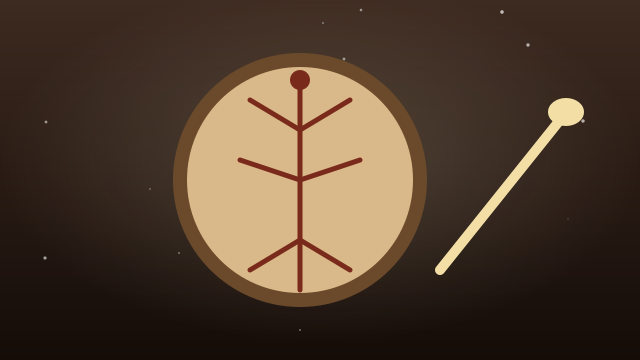 Illustration: a frame drum, used across many shamanic traditions to induce trance
A shaman is typically understood to be someone who can voluntarily enter an altered state of consciousness — often called a "journey" — in order to communicate with spirits, retrieve lost souls, diagnose and heal illness, or divine the causes of misfortune. Anthropologist Mircea Eliade, whose 1951 study popularized the modern academic understanding of the term, described this as "techniques of ecstasy": methods for the soul to leave the body and travel to upper or lower worlds.
Common techniques for entering trance include rhythmic drumming, chanting, fasting, sensory deprivation, extended dance, and in many cultures the ritual use of plant medicines — from Siberian fly agaric mushrooms to Amazonian ayahuasca. The drum in particular is often described by practitioners as a vehicle or "horse" that carries the shaman's spirit on its journey.
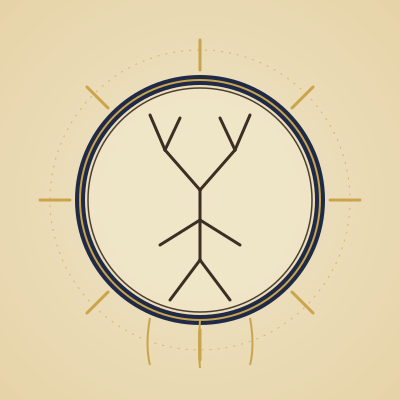
Shamanic drums, painted with spirit-animal motifs, are among the practice's oldest and most widespread ritual tools
Across many cultures, the path to becoming a shaman is not simply chosen — it is often marked by a severe illness, psychological crisis, or near-death experience interpreted as a call from the spirit world. Surviving this "shamanic initiation" and being trained by an established practitioner confers the ability to move between worlds safely and return.
The shaman's role in traditional societies was frequently multifaceted: healer, psychopomp guiding the dead to the afterlife, weather-worker, diviner, and keeper of oral tradition and cosmology.
While the term originates in Siberia, comparable practices have been documented independently across the world: among the Sámi of northern Scandinavia, in numerous Indigenous nations of North and South America, among Mongolian and Central Asian peoples, and in parts of sub-Saharan Africa and Southeast Asia. Scholars debate how much these traditions share beyond family resemblance, but the pattern of trance, spirit contact, and communal healing recurs strikingly across unconnected cultures.
Since the mid-20th century, a distinct movement often called neo-shamanism has adapted these techniques — sometimes respectfully, sometimes controversially — for Western spiritual seekers, frequently stripped of the specific cultural and communal context in which they originally functioned.
Key Techniques: Drumming, trance, soul journey, plant medicine, spirit communication
Related Topics: Animism, ancestor veneration, psychopomp traditions, altered states of consciousness
Shamanism on Wikipedia · Britannica: Shamanism · Mystic arts